Overview
Designing with, not just for
True inclusion starts when designers stop treating accessibility like a secondary feature and approach it as a means of creating better experiences for everyone. AR gaming has this ability to bring people together and encourage movement, yet disabled players are often left out of this experience. This project was an effort to change that by shifting from designing for a community, to listening, learning, and creating alongside them.
I worked with my team to redesign and extend features in Pikmin Bloom to create a more inclusive and thoughtful experience by introducing accessibility features that support both mobility and dexterity needs.
- Focus
- Mobility and dexterity accessibility
- Framework
- Accessible Player Experiences (APX)
- Research
- 4 interviews with players with lower-body injuries or mobility-related conditions
- Output
- Two accessibility features for Pikmin Bloom
Problem Statement
Accessibility barriers in gameplay
By tying game progression strictly to footsteps with a heavy reliance on fine motor interactions, the current game fails to accommodate the diverse ways people move and interact, closing off a path that should be open to everyone.
That closed the game off in two ways
Progression
Steps only
Progress is tied strictly to footsteps, so other ways of moving don't count.
Interaction
Fine motor input
Core actions rely on precise gestures like swiping and dragging.
The Solution
From "Motivation to Walk" to "Motivation to Move"
My team and I reimagined what it means to go on a "walk" by shifting from a traditional step-counter to an inclusive activity tracker. Grounded in the Accessible Player Experiences framework (APX), my solution replaces step count with a motion-intensity tracker that measures effort instead. Paired with redesigned dexterity-accessible interaction, this extension ensures that players with mobility and fine motor impairments are able to immerse themselves in the game comfortably and confidently.
Research and Pain Points
Effort and movement mattered more than step counts
I interviewed four participants with lower-body injuries or mobility-related conditions, including both Pikmin Bloom users and non-users, and identified several key pain points:
01
Effort does not translate to steps
Step counts fail to reflect real physical exertion. Players moving with injuries, slower paces, or assistive devices often work harder for fewer recorded steps, leading to feelings of guilt rather than motivation.
02
People care more about the game than the steps
Users care less about the steps themselves and more about gameplay progression, such as collecting items, completing expeditions, and completing tasks. Momentum and completion drive engagement.
03
Movement is bigger than just walking
Users want movement systems to recognize a wider range of activities beyond walking, including strength training, indoor workouts, and adapted exercises.
Design Features
Two features for mobility and dexterity
After exploring user flows, I identified two core accessibility features to make gameplay more inclusive for users with mobility and dexterity impairments.
01
Movement Beyond Steps
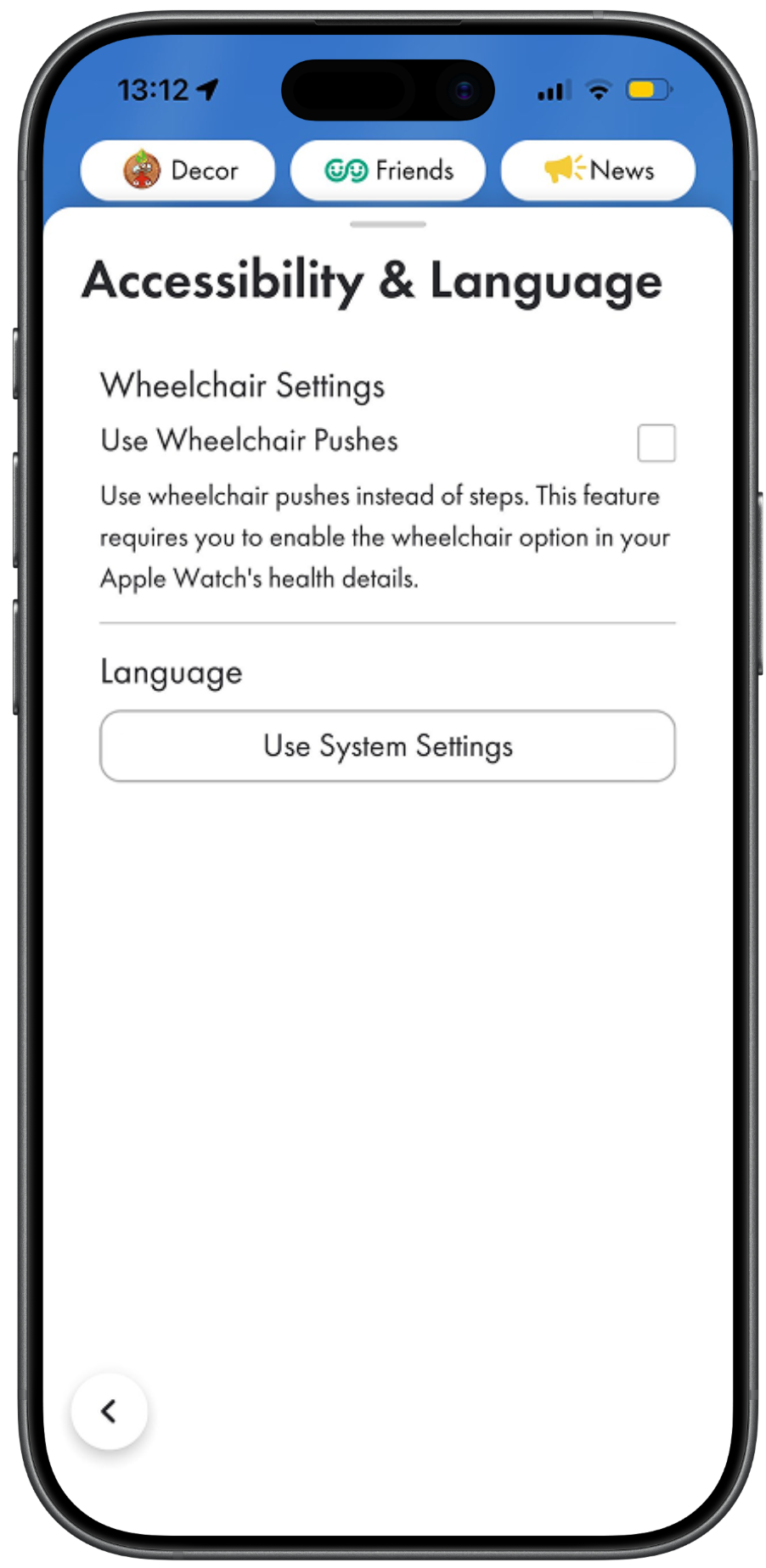
Before
Progress relied on recorded steps, so movement with wheelchairs or mobility aids was under-counted.
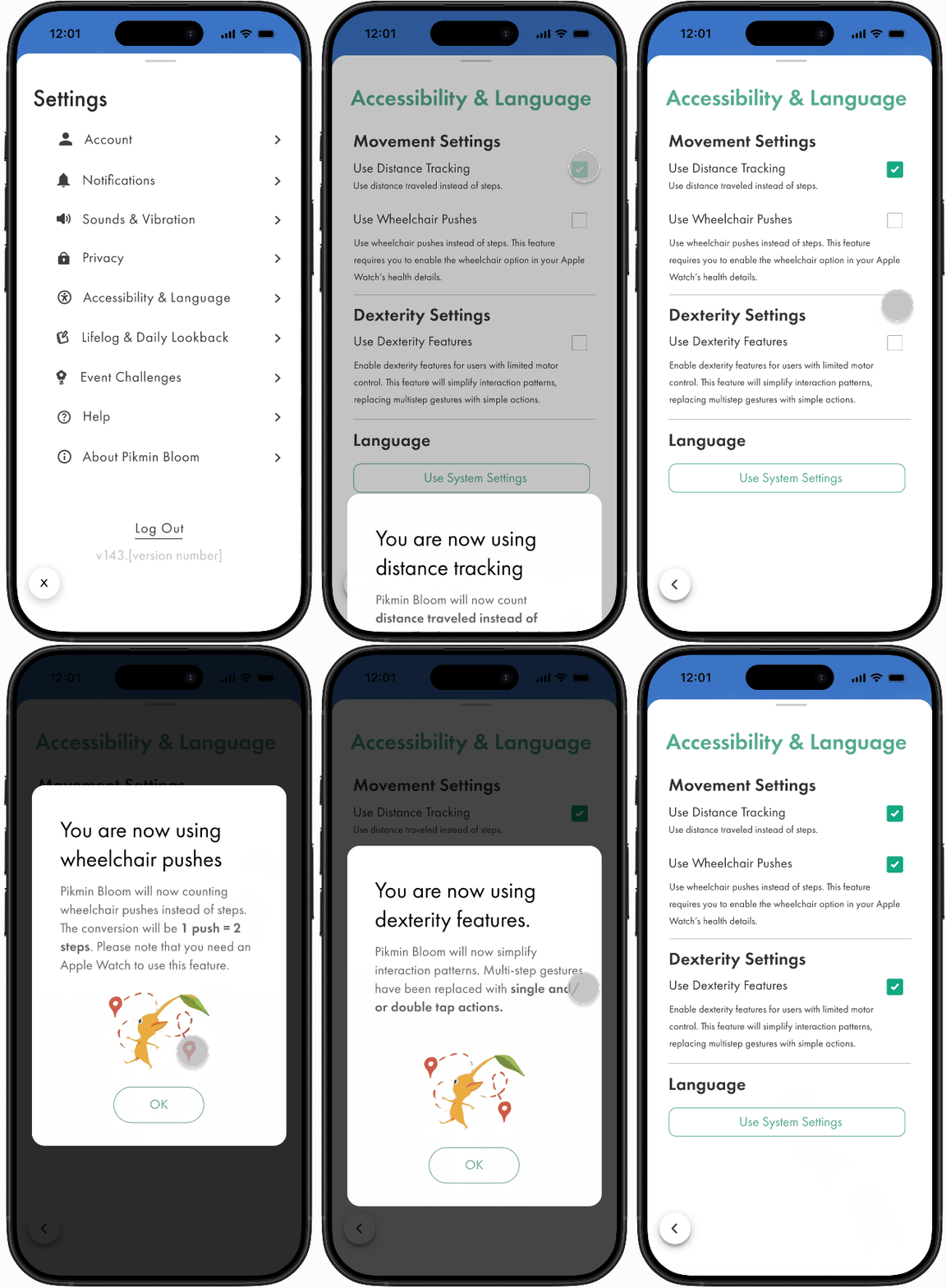
After
Players can choose distance-based goals, like miles, so effort is measured equitably regardless of walking ability.
02
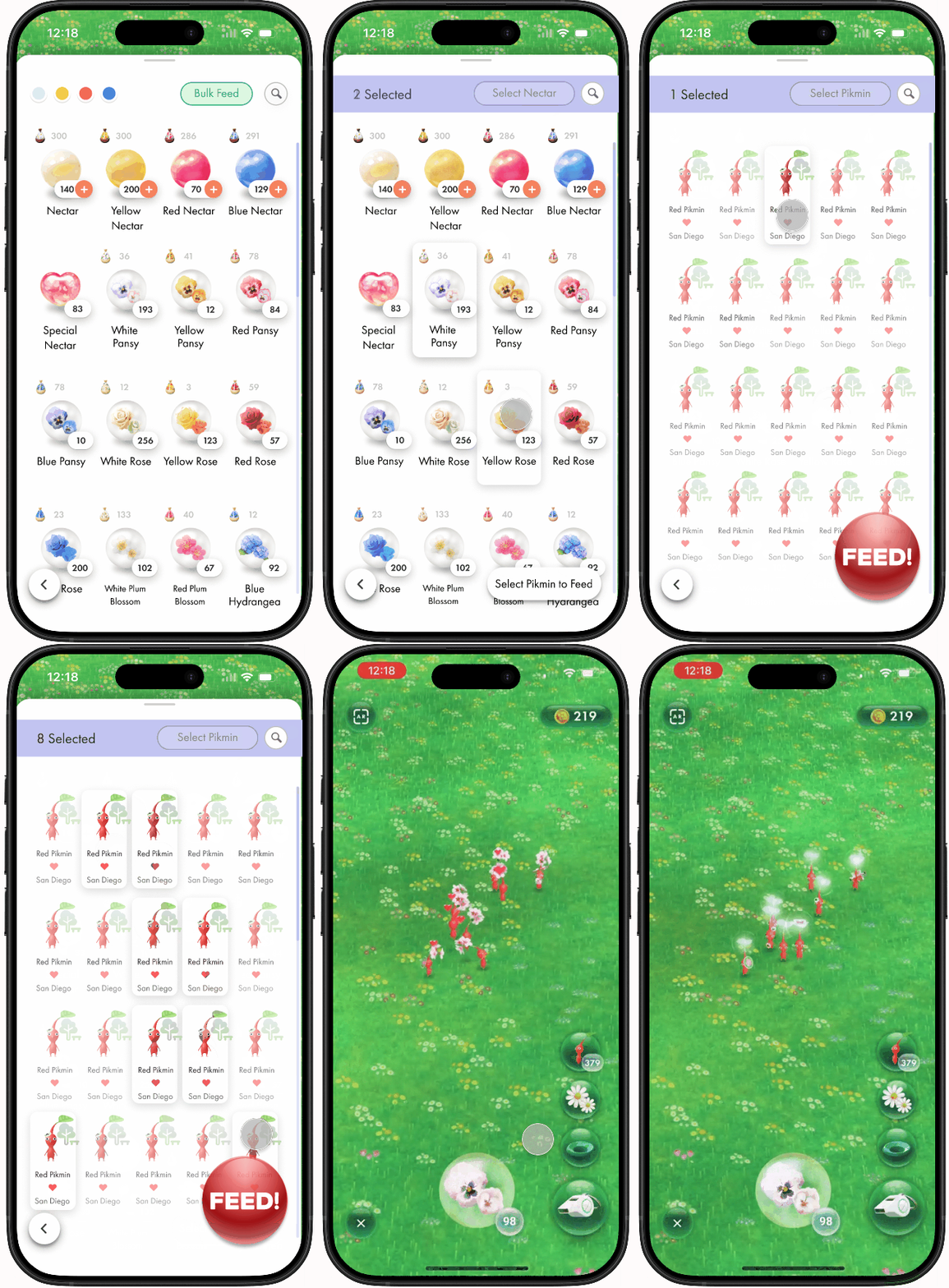
Dexterity-Friendly Interactions
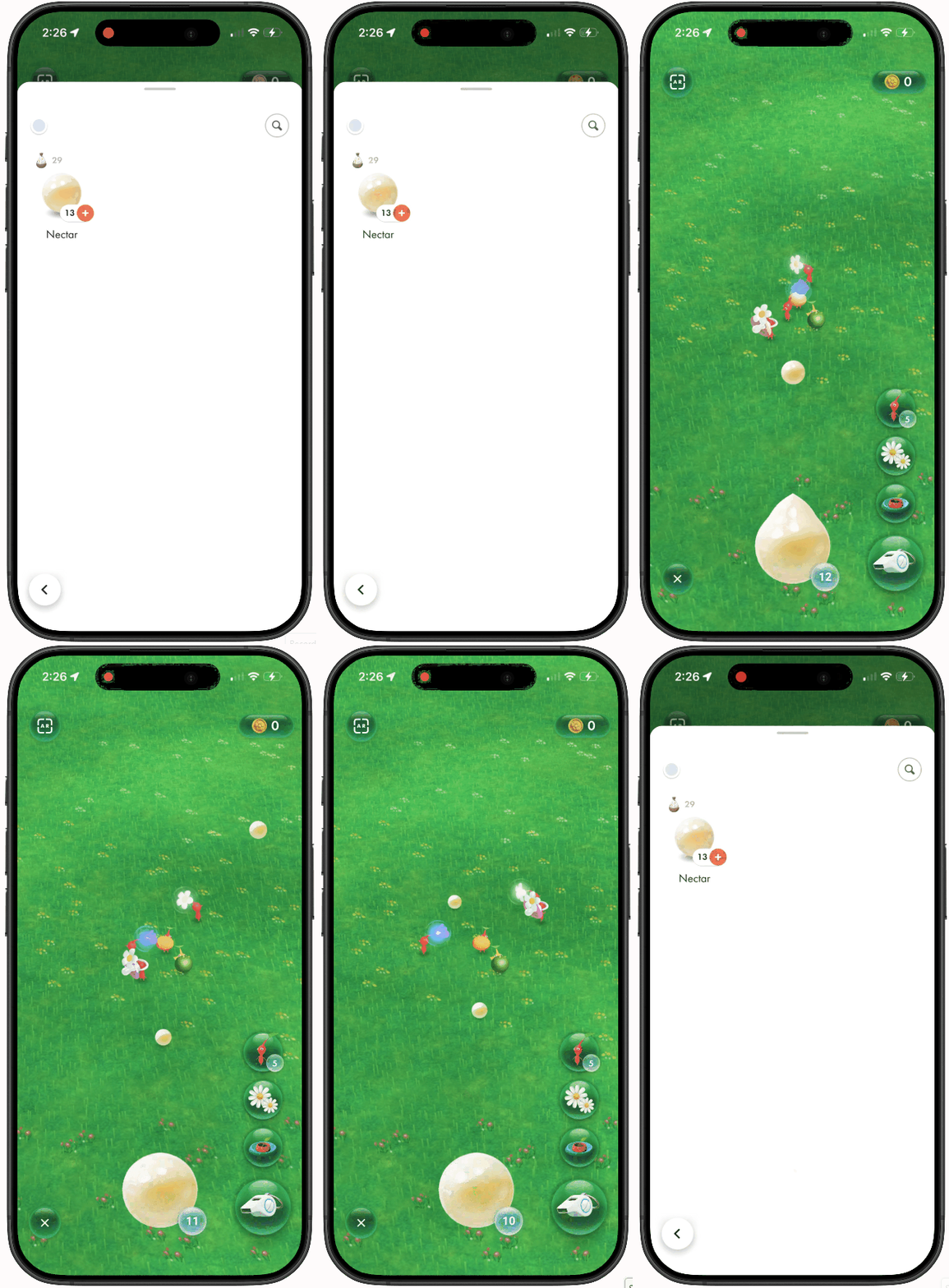
Before
Feeding Pikmin was one-by-one, and a drag-to-select shortcut went unnoticed in testing.
After
Single and double taps replace dragging and swiping, with a bulk feed flow that lowers physical and cognitive effort.
Reflection
Lived experience can't be replicated
If this project taught me anything, it's that no matter how hard you try to step into someone else's shoes, it will never replace nor replicate their actual lived experiences. As a designer, I can try to anticipate every single use case and roadblock, but user research will always throw me a curveball that completely changes my perspective.
More than anything, this project reminded me why I chose to pursue UX/UI design and why it matters to me. Technology and digital experiences should be accessible to everyone, regardless of one's abilities, backgrounds, or life experiences. True accessibility comes from designing with people, not just for them, by including their voices and experiences throughout the design process.